The Most Expensive Employee You Don't Know About
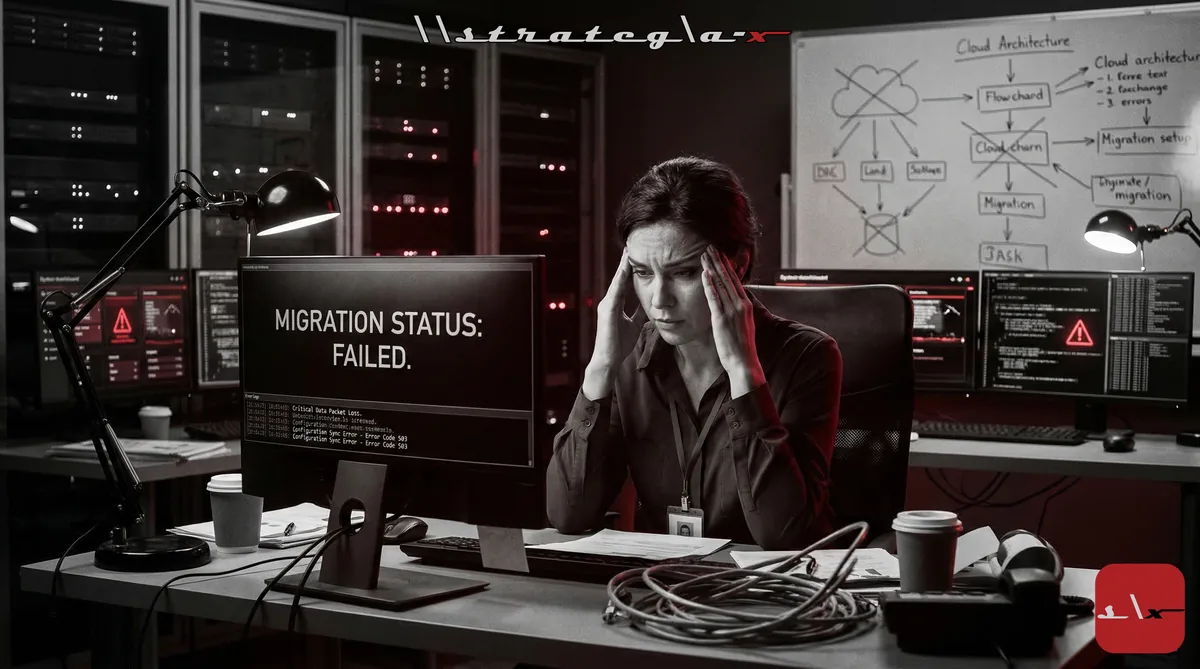
There's a role in your organization that doesn't appear on any org chart. It's not in your payroll system. It doesn't have a job title. But it consumes more labor hours than most of your named positions.
It's the human integration layer, the collective time your employees spend copying data from one system to another, re-keying information that already exists somewhere else, manually reconciling records across platforms, and building spreadsheet bridges between tools that should be connected but aren't.
A sales rep closes a deal in the CRM, then manually creates the project in the PM tool, then emails accounting to generate an invoice, then updates the capacity spreadsheet. An operations manager exports data from the ERP, reformats it in Excel, and uploads it to the reporting dashboard. A customer success agent toggles between four browser tabs to piece together a client's complete history because no single system has the full picture.
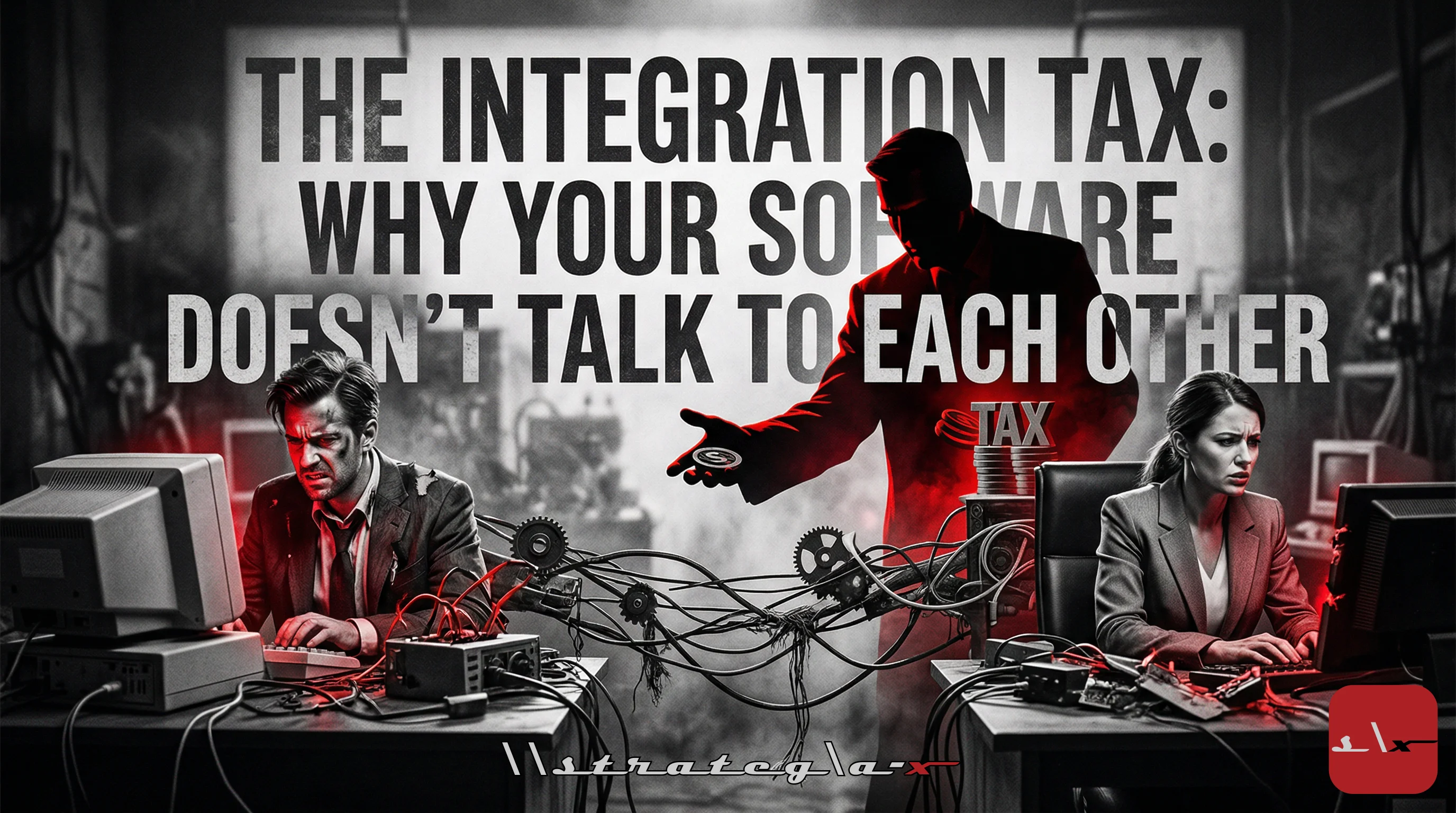
This is the integration tax. And every business pays it, whether they realize it or not.
How the Integration Tax Compounds
The integration tax isn't just wasted time. It's a compounding problem that degrades your entire operation:
1. Data Entry Errors
Every time a human re-keys data from one system to another, there's an error rate. Industry research puts manual data entry error rates at 1-4%. That sounds small until you multiply it across thousands of records per month. A 2% error rate on 5,000 monthly transactions means 100 records with incorrect data, wrong amounts, wrong dates, wrong customer details, wrong product codes. Those errors cascade downstream into inaccurate reports, incorrect invoices, and flawed business decisions built on dirty data.
2. Latency
When data moves between systems manually, it moves at the speed of human workflow, which means it's always stale. The CRM shows the deal closed, but the finance system won't reflect the revenue until someone processes it tomorrow morning. The inventory system shows stock available, but the warehouse actually shipped the last units an hour ago. The support team is troubleshooting a problem that engineering already fixed in the last deployment, but the status update hasn't propagated from Jira to the support portal.
Manual integration means every system in your organization is operating on a different version of reality. Decisions are made on data that's hours or days old. And in fast-moving markets, stale data is wrong data.
3. Opportunity Cost
Every hour your team spends on data transfer is an hour they're not spending on work that creates value. The salesperson manually entering project details isn't selling. The accountant re-keying invoice data isn't analyzing cash flow. The operations manager building Excel bridges isn't optimizing processes.
A study by Salesforce found that sales reps spend only 28% of their time actually selling. The rest is administration, data entry, and system navigation. For most knowledge workers, the ratio is similar, a substantial portion of their workweek is consumed by tasks that exist only because their tools don't communicate.
4. Institutional Fragility
When the integration between systems depends on specific people knowing which spreadsheet to update, which export format to use, and which fields map to what, your operations become dependent on tribal knowledge. When that person goes on vacation, things break. When they leave the company, things really break. The integration isn't documented because it was never designed. It evolved organically, person by person, workaround by workaround, until the entire data flow depends on institutional memory that no single person fully understands.
Why This Keeps Happening
If system integration is so obviously valuable, why do most SMBs still operate with disconnected tools? Three reasons:
1. SaaS Buying Is Decentralized
Marketing buys HubSpot. Sales buys Salesforce. Finance buys QuickBooks. Engineering buys Jira. Each department selected the best tool for their specific needs, and nobody asked whether these tools could actually talk to each other. The result is a best-of-breed stack with zero interoperability. Every tool is excellent in isolation and useless as part of a system.
2. Integration Costs Are Invisible
Nobody budgets for integration. The CRM costs $50/user/month and that line item is in the budget. The 15 hours per week your team spends manually moving data between the CRM and other systems? That labor cost is buried in salary expenses. Nobody tracks it. Nobody measures it. Nobody realizes that the hidden integration cost exceeds the software license cost by a factor of three.
3. "We'll Integrate Later" Is the Default
Every new tool purchase comes with a vague promise to "integrate it with everything else later." Later never comes. The tool gets adopted. Workarounds emerge. Those workarounds become standard operating procedures. And within six months, the manual integration is so embedded in daily operations that nobody questions it anymore, it's just "how things work here."
The Integration Playbook
Breaking the integration tax doesn't require ripping out your entire stack and replacing it with a monolithic platform. It requires a systematic approach to connecting what you already have:
1. Map Your Data Flows
Before you automate anything, document how data actually moves through your organization today. Not how it's supposed to move, how it actually moves. Follow a customer order from first contact to final delivery. Every system touch, every manual handoff, every copy-paste operation, every spreadsheet bridge. This map reveals where the integration tax is highest and where automation will deliver the most impact.
2. Prioritize by Pain and Volume
You can't integrate everything at once. Prioritize the integrations that involve the highest volume of manual data transfer and the highest business impact when that data is wrong or late. Typically, the highest-value integrations are: CRM → Finance (deal-to-invoice), CRM → Project Management (sale-to-delivery), and ERP → Reporting (operations-to-dashboard).
3. Use Integration Platforms, Not Custom Code
Modern Integration Platform as a Service (iPaaS) tools, Zapier, Make (formerly Integromat), Workato, Tray.io, Microsoft Power Automate, provide pre-built connectors for hundreds of SaaS applications. For most SMB integration needs, these platforms can connect your systems in hours, not weeks, with no custom development required. They're maintainable by non-engineers, they handle error cases gracefully, and they scale as your data volumes grow.
Reserve custom API integrations for scenarios where no pre-built connector exists or where you need real-time, high-volume data synchronization that exceeds iPaaS capabilities.
4. Establish a Single Source of Truth
For every critical data entity, customers, products, orders, employees, designate one system as the authoritative source. All other systems receive data from that source, not the other way around. This eliminates conflicting records, version confusion, and the "which system is right?" conversations that waste hours every week.
5. Budget for Integration at Purchase Time
When evaluating any new SaaS tool, add integration cost to the total cost of ownership. Does it have native integrations with your existing stack? Does it offer a robust API? What will it cost, in time, tools, and maintenance, to connect this new system to your data ecosystem? A tool that's 20% cheaper but requires $30,000 in custom integration work isn't actually cheaper.
The Bottom Line
Your employees are not integration middleware. Every hour they spend moving data between disconnected systems is an hour of skilled labor wasted on a problem that machines solved a decade ago. The integration tax is real, it's expensive, and it compounds every month you ignore it.
Map your data flows. Quantify the manual labor. Prioritize the highest-impact connections. And stop treating integration as an afterthought, because the businesses that connect their systems don't just operate more efficiently. They make better decisions, move faster, and outcompete organizations that are still running on copy-paste and spreadsheet bridges.
-Rocky
#Systemintegration #Ipaas #Automation #Datastrategy #Saas #Digitaltransformation #Smb #Workflow #Api #Processimprovement #EngineeringDreams #StrategiaX